Telcoin is a unique project at the intersection of blockchain, telecom, and banking. In November 2025, it received final approval to operate as the first Digital Asset Depository Institution in the United States (Nebraska), making it the first American crypto bank with the right to issue stablecoins. On December 26, 2025, eUSD was launched — the first bank-issued dollar stablecoin on a public blockchain ($10M in the initial issuance). TEL’s price at the end of May 2026 is around $0.0029-0.0033 with a market capitalization of about $277 million. The expected Telcoin Network mainnet in Q1 2026 is still delayed, creating both risk and upside potential upon launch.
Disclaimer: This material is for informational purposes only and does not constitute personalized investment advice. Cryptocurrencies are a high-risk asset with high volatility. Make any investments only with funds you can afford to lose.
- Update: May 2026
- What Is Telcoin
- The Main Idea
- What Telcoin Offers
- Regulatory footprint
- Telcoin Bank: the first crypto bank in the US
- What happened — timeline
- What this means in practice
- How is this different from Coinbase, Kraken, and others?
- What Telcoin Plans to Obtain Next
- eUSD: the first bank-issued stablecoin
- What is eUSD in simple terms
- How eUSD Differs from USDT, USDC, and Other Stablecoins
- The Main Advantage of eUSD
- Telcoin Network: its own blockchain
- What it is and why
- A unique feature — consensus based on mobile operators
- Adiri Testnet — current status
- What the mainnet launch will bring
- Telcoin Wallet V5
- What’s New in V5
- Technical Specifications
- Customer onboarding
- TEL Tokenomics
- Basic Parameters
- TEL Utility
- Supply distribution
- TEL Price Forecast
- Current situation (as of May 27, 2026)
- Top Analysts’ Forecasts for 2026
- Scenario Analysis
- Conservative Scenario (50% probability)
- Moderately optimistic scenario (35% probability)
- Bullish scenario (10% probability)
- “Moonshot” scenario (5% probability)
- Long-term forecasts
- What could limit the growth
- Where to Buy TEL in 2026
- Top Exchanges to Buy TEL
- 1. Kraken — listed since January 26, 2026
- 2. KuCoin — the main exchange for the Russian-speaking audience
- 3. Phemex — a growing player
- 4. Gate.io — for advanced trading
- 5. Uphold — for retail investors
- Step-by-step guide: how to buy TEL on KuCoin
- Where to store TEL after purchase
- Partnerships and Presence
- Geography
- Mobile World Congress 2026 (Barcelona)
- GSMA Standards Alignment
- Key Partners
- Telcoin vs Ripple vs Stellar vs Circle
- Comparison table
- What makes Telcoin unique
- Where Telcoin Is Weaker
- The GENIUS Act and Stablecoin Regulation
- What the GENIUS Act Says
- What This Means for the Market
- The Advantage of Telcoin
- Telcoin’s Strengths
- 1. A Unique Regulatory Moat
- 2. A real working product
- 3. Huge addressable market
- 4. Institutional Strategy
- 5. Tokenomics with a burn mechanism
- 6. Has Already Raised $25M in Pre-A
- Risks and Challenges for Investors
- 1. Mainnet delay — the main risk
- 2. Low real transaction volume
- 3. Competition with giants
- 4. Liquidity and whale risk
- 5. Regulatory Risks
- 6. Technical risk of a new blockchain
- 7. Team and execution
- Metrics to Track
- Technical Metrics
- Fundamental metrics
- News Triggers
- Useful resources
- Frequently Asked Questions (FAQ)
- What is Telcoin in simple terms?
- What is eUSD and how is it different from USDT and USDC?
- When will the Telcoin Network mainnet launch?
- Where can you buy TEL in 2026?
- What is the TEL price forecast for the end of 2026?
- Is it safe to invest in Telcoin?
- How do you open an account with Telcoin Bank?
- What is the burn mechanism in Telcoin Network?
- Does the GENIUS Act affect Telcoin?
- How is Telcoin different from Ripple (XRP)?
- Why does Telcoin need its own blockchain if Polygon already exists?
- What are the risks of Telcoin for an investor?
- What should you do if TEL rises on mainnet news?
- When is the best time to buy TEL — now or after mainnet?
- Where can you find the latest Telcoin news?
- Conclusion
Update: May 2026
If the last time you read about Telcoin was in autumn 2025, a great deal has changed:
- November 12, 2025 — Telcoin received final charter approval (not conditional!) from Nebraska Governor Jim Pillen, becoming the first Digital Asset Depository Institution in the U.S.
- December 26, 2025 — eUSD was actually launched on Ethereum and Polygon, with $10 million minted in the first issuance
- January 26, 2026 — TEL listing on Kraken — one of the key liquidity events
- March 2026 — Telcoin’s CEO took part in Mobile World Congress 2026 alongside executives from Mastercard, Huawei, Standard Bank, and GSMA on the transformation of the $13 trillion global payments market
- The V5 wallet with bank accounts launched in early 2026 — users can deposit USD and receive eUSD
- TEL price went through a +109% rally after the November approval (up to $0.00689) and has now stabilized around $0.0029-0.0033
- Telcoin Network mainnet is still not launched — the Adiri testnet is in the hardening/performance validation phase. The expected Q1 2026 has already partly passed — delay
Main takeaway for 2026: Telcoin has moved from the category of “promises” to the category of a “working regulated product”. This is a rare example of a crypto project successfully overcoming regulatory barriers in the United States. The key question is whether the mainnet and real transaction volume will manage to meet market expectations.
What Is Telcoin
Telcoin is a fintech project at the intersection of blockchain, telecoms, and banking regulation. The company’s goal is to turn a smartphone into a full-fledged financial tool: a wallet, a bank account, and a payment system all at once.
The Main Idea
According to the World Bank, there are:
- ~7 billion mobile phones
- ~1.2 billion active bank accounts
This gap of 5+ billion people is exactly the Telcoin market. Especially in developing countries, where people have a phone but do not have access to proper banking infrastructure.
What Telcoin Offers
- Telcoin Wallet — a mobile self-custodial wallet operating in 171 countries
- Money transfers (remittance) to 40+ e-wallets with fees of 2% or less
- Digital Cash — multi-currency stablecoins issued by a regulated bank
- Telcoin Bank — the first Digital Asset Depository Institution in the US
- Telcoin Network — its own EVM blockchain (in development)
- Partnerships with 20+ mobile operators in developing countries
Regulatory footprint
Unlike 90% of crypto projects, Telcoin focused on regulatory compliance rather than decentralization at any cost. As of May 2026, the project holds licenses and registrations in:
- 🇺🇸 USA — Nebraska Digital Asset Depository Institution charter
- 🇸🇬 Singapore — Major Payment Institution license
- 🇱🇹 Lithuania — provider registration
- 🇨🇦 Canada — money services business
- 🇦🇺 Australia — financial services registration
This creates a strong moat (protective moat) against competitors that cannot move through regulatory procedures as quickly.
Telcoin Bank: the first crypto bank in the US
This is the most important part of the project and the reason why Telcoin is attracting so much attention in 2025–2026.
What happened — timeline
| Date | Event |
|---|---|
| 2023 | Telcoin applied for a banking charter in Nebraska |
| February 2025 | Received conditional approval from the Nebraska Department of Banking and Finance |
| April 2025 | The DADI Act (Digital Asset Depository Institution Act) was passed in Nebraska |
| October 2025 | Telcoin raised $25 million in a Pre-A round for banking operations |
| 🎉 November 12, 2025 | Final charter approval from Governor Pillen — TDAB is officially operational |
| December 26, 2025 | Launch of eUSD on Ethereum and Polygon ($10M initial issuance) |
| Q1 2026 | Customer onboarding via Telcoin Wallet V5 |
What this means in practice
Telcoin Digital Asset Bank (TDAB) is the first banking institution in the US specializing in digital assets. What it can do:
✅ Accept crypto deposits (BTC, ETH, etc.)
✅ Issue crypto-backed loans
✅ Issue regulated stablecoins (eUSD, with eEUR and others planned)
✅ Connect to Federal Reserve payment rails (master account access)
✅ Link bank USD accounts with DeFi through smart contracts
✅ Serve both individuals and legal entities
How is this different from Coinbase, Kraken, and others?
- ❌ Coinbase, Kraken are crypto exchanges with money services licenses. They are NOT banks.
- ❌ Circle (USDC) is a fintech company, but not a bank. USDC is not issued by a bank.
- ❌ Anchorage Digital has an OCC trust charter (federal), but it is a trust, not a bank.
- ✅ Telcoin is a full-fledged bank at the state level with the right to conduct deposit operations and issue stablecoins.
Why this matters: A banking license provides a level of regulatory trust unavailable to other crypto projects. This attracts institutional investors and major payment integrations.
What Telcoin Plans to Obtain Next
A state license is only the beginning. TDAB’s plans include:
- Federal Reserve master account — direct access to the Fed’s payment systems
- Battle Creek State Bank integration — Telcoin owns 24.9% of the shares of this bank (a Federal Reserve member with FDIC deposit insurance). This will make it possible to integrate a “traditional partner bank” into its ecosystem
- National bank charter — potentially obtaining a federal license in the future
eUSD: the first bank-issued stablecoin
eUSD is a historic product. For the first time in U.S. history, a bank has issued its own stablecoin, backed by USD deposits and short-term Treasuries, directly on a public blockchain (Ethereum + Polygon).
What is eUSD in simple terms
eUSD is a digital dollar that:
- 1 eUSD = $1 USD (stable peg)
- Issued by a regulated U.S. bank (Telcoin Digital Asset Bank)
- Backed by USD deposits + U.S. Treasuries in reserves
- Operates on the public blockchains Ethereum and Polygon
- Complies with the GENIUS Act requirements (federal stablecoin regulation 2025)
- Available 24/7/365 for transfers
How eUSD Differs from USDT, USDC, and Other Stablecoins
| Parameter | USDT (Tether) | USDC (Circle) | eUSD (Telcoin) |
|---|---|---|---|
| Issuer | Tether Limited (BVI) | Circle (USA, fintech) | Telcoin Digital Asset Bank (U.S. bank) |
| Regulation | Low transparency | Money transmitter | Banking charter (DADI) |
| Reserves | Mixed | USD + Treasuries | USD deposits + Treasuries |
| Audit | Quarterly | Monthly | Bank audit + regulator |
| Deposit protection | No | No | Part of the reserves is held within a banking structure |
| GENIUS Act | Not fully | Compliant | Fully compliant |
| Availability | Globally, except the USA | Everywhere | Through bank accounts |
The Main Advantage of eUSD
Unlike USDT and USDC, eUSD is a banking product. This means:
- Bank-level regulatory protection
- Direct connection to bank USD accounts — funding via USD deposit
- Legal clarity for use in the U.S. (post-GENIUS Act)
- Reserves within a banking structure — not just on-chain
- Free conversion USD ↔ eUSD through a bank account
Forecast: if the trend toward stablecoin regulation in the US continues, eUSD could occupy the niche of an “institutional” stablecoin, while USDT will remain the global retail standard.
Telcoin Network: its own blockchain
In addition to operating on Polygon, Telcoin is building its own EVM-compatible Layer 1 blockchain — Telcoin Network.
What it is and why
Telcoin Network is a blockchain designed specifically for:
- Regulated banking operations
- High throughput for payments
- Integration with mobile operators
- Telecom-grade reliability
A unique feature — consensus based on mobile operators
Unlike classic Proof-of-Stake blockchains, the validators of the Telcoin Network are mobile operators aligned with GSMA standards. This means:
- Telecom-grade reliability — operators are already accustomed to 99.99% uptime
- Global coverage — operators are present in every country
- Regulatory compatibility — telecoms are regulated more strictly than crypto validators
- Aligned incentives — operators are interested in the network’s success
Adiri Testnet — current status
As of May 2026, Adiri Testnet is in the “hardening and performance validation” phase. This means:
- ✅ The testnet is live, and documentation and faucets are available
- ✅ Core features are demonstrated (payments, smart contracts)
- ⚠️ The mainnet has not launched yet, although it is announced for Q1 2026
- ⚠️ The team is not rushing in order to avoid mistakes (security first)
What the mainnet launch will bring
This is the main catalyst for TEL growth in 2026:
- Burn mechanism — each transaction on Telcoin Network will burn a portion of TEL through gas fees. This creates deflationary pressure on the token.
- Staking — TEL holders will be able to stake tokens to secure the network and earn rewards.
- Native gas token — TEL will become required for any transactions on the network.
- Integration with TDAB — banking operations (minting eUSD, transfers) will take place on Telcoin Network.
- Telecom integration — mobile operators will be able to launch their own applications on the blockchain.
Risk: a delay to the mainnet could “kill” the narrative. Each quarter without a launch reduces investor enthusiasm.
Telcoin Wallet V5
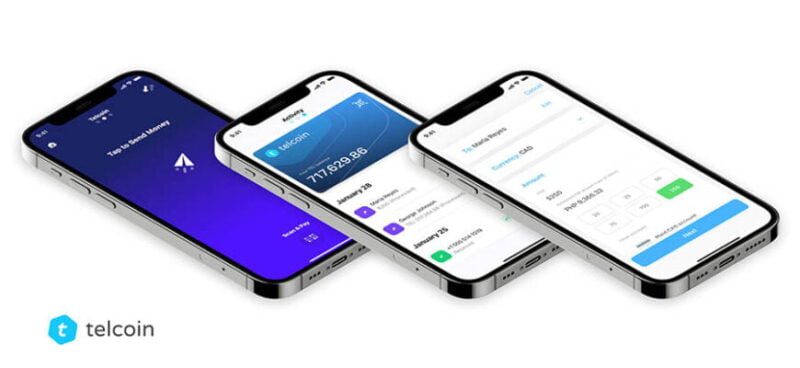
In January 2026, Telcoin Wallet V5 was launched — the project’s main consumer product.
What’s New in V5
Bank Account Integration — users can link a USD bank account to the wallet
eUSD support — USD deposit → receive eUSD in the wallet
Cross-chain transfers — eUSD between Ethereum and Polygon
40+ e-wallet integrations — transfers to WeChat Pay, Paytm, GCash, and others
Improved KYC flow — fast registration for banking customers
Business accounts — for entrepreneurs (mint/redeem eUSD)
Technical Specifications
- Self-custodial — the private keys remain with the user
- Available in 171 countries
- Support for 40+ e-wallets in developing countries
- Remittance fees — 2% or less
- Biometrics — Face ID, Touch ID
- Polygon network — low fees
Customer onboarding
Customer onboarding for Telcoin Bank began at the beginning of 2026 via V5. Process:
- Download Telcoin Wallet V5 from the App Store / Google Play
- Complete KYC (documents + selfie)
- Link a USD bank account via ACH
- Deposit USD → automatically receive eUSD in the wallet
- Use eUSD for payments, transfers, and DeFi
This is a game-changer. For the first time in the U.S., a user can receive a regulated bank-issued stablecoin in a self-custodial wallet through a mobile app.
TEL Tokenomics
Basic Parameters
| Parameter | Value |
|---|---|
| Max supply | 100 000 000 000 TEL (100 billion) |
| Circulating supply (May 2026) | ~96,074,200,000 TEL (96 billion) |
| Market cap (May 2026) | ~$277 million |
| Rank on CoinMarketCap | ~#121-139 |
| Standard | ERC-20 (Ethereum) + bridged Polygon |
| All-time high | $0.0649 (January 2018) |
| 52-week high | $0.00689 (November 2025, after the charter) |
TEL Utility
TEL is currently used as:
- Internal token in Telcoin Wallet — swaps, transfers
- Liquidity provision on TELx (Telcoin DEX protocol)
- Staking rewards — currently limited, until mainnet
- Governance — participation in Telcoin Association decision-making
After the launch of the Telcoin Network mainnet, the following will be added:
- Native gas token — payment for all transactions on the network
- Burn mechanism — part of the gas fees is burned → deflation
- Validator staking — operators stake TEL to participate in consensus
- Network governance — voting on network parameters
Supply distribution
- The circulating supply is already 96% of the max supply — that’s a plus (there is no huge dilution potential)
- However, large whale holders have significant influence
- Liquidity is distributed across KuCoin, Kraken, Gate.io, Phemex, and Uphold
- Daily volume is low — around $540K-3M (depending on the day), which makes the price sensitive to large orders
TEL Price Forecast
These are scenarios, not financial recommendations. Cryptocurrencies are a highly volatile asset.
Current situation (as of May 27, 2026)
- Price: $0.0029-0.0033 (depends on the exchange)
- Trend: sideways movement after the early May rally (+30% in 24 hours, +76% in a week)
- RSI: overbought conditions are easing, consolidation is expected
- Volume: $540K-3M daily — low
- Fear & Greed: ~15-23 (Extreme Fear → Fear)
Top Analysts’ Forecasts for 2026
| Source | Minimum 2026 | Average 2026 | Maximum 2026 |
|---|---|---|---|
| Changelly | $0.00201 | $0.00244 | $0.00385 |
| DigitalCoinPrice | $0.00255 | $0.00329 | $0.00467 |
| TradersUnion | $0.00467 | $0.00477 | $0.00562 |
| Finst (bullish) | — | — | €0.001488 |
| KuCoin Research | — | $0.003-0.015 | up to $0.10 amid mainnet hype |
| CryptoNewsNavigator | $0.003 | — | $0.015 (bull case) |
Scenario Analysis
Conservative Scenario (50% probability)
Key assumptions:
- Mainnet is delayed until Q3-Q4 2026
- Customer adoption is slow
- Bitcoin continues consolidating
Price by the end of 2026: $0.0025-0.0035
Moderately optimistic scenario (35% probability)
Key assumptions:
- Mainnet launches in Q2–Q3 2026
- The burn mechanism is activated
- eUSD adoption is growing ($100M+ in circulation)
- Bitcoin breaks new ATHs
Price by the end of 2026: $0.005-0.012
Bullish scenario (10% probability)
Key assumptions:
- Mainnet launched successfully
- Tier-1 listing (Binance)
- eUSD reaches $500M+ in circulation
- Telcoin secures several major telecom partnerships
- Altseason in full swing
Price by the end of 2026: $0.015-0.05
“Moonshot” scenario (5% probability)
What must happen:
- Mainnet + large-scale institutional adoption
- Telcoin becomes the de facto standard for crypto banking in the U.S.
- Federal Reserve master account obtained
- Altseason enters its second phase with massive capital rotation
Price by the end of 2026: $0.05-0.10+
Long-term forecasts
| Year | Minimum | Average | Maximum |
|---|---|---|---|
| 2027 | $0.0025 | $0.0057 | $0.0086 |
| 2028 | $0.0035 | $0.0064 | $0.012 |
| 2029 | $0.0046 | $0.0067 | $0.018 |
| 2030 | $0.0050 | $0.0071 | up to $0.10 (KuCoin bull case) |
What could limit the growth
Main risks for the TEL price:
- Mainnet delay — each quarter without a launch reduces trust
- Low real transaction volume — if adoption does not materialize, the narrative collapses
- Competition from Ripple, Stellar — established players in remittances
- Regulatory changes — repeal of the GENIUS Act or tighter regulation
- Whale dump — large holders can «crash» the price
- Bitcoin crash — the broader bear market will drag TEL down
Where to Buy TEL in 2026
In 2026, TEL is available on several major exchanges. Here are the best options:
Top Exchanges to Buy TEL
1. Kraken — listed since January 26, 2026
Kraken is one of the oldest and most regulated exchanges in the United States. The TEL listing in January 2026 became an important milestone for the project.
Advantages:
- Fully regulated in the USA
- High TEL liquidity
- Top-tier security (has never been hacked)
- Purchase by card and via bank transfer
- Integration with bank transfers
Cons: strict KYC, restrictions for some countries.
2. KuCoin — the main exchange for the Russian-speaking audience
KuCoin is the most popular exchange among Russian- and Ukrainian-speaking users. TEL has long been listed with high liquidity.
Advantages:
- Available without strict KYC for basic limits
- Russian-language support
- Multiple TEL trading pairs (USDT, BTC)
- Convenient mobile app
- Regular promotions and airdrops
Learn more about KuCoin in our article “KuCoin — the exchange of the new bull run 2025”.
3. Phemex — a growing player
Phemex is actively promoting TEL and provides good liquidity.
Advantages:
- Fast execution
- Low fees
- TEL derivatives (futures)
4. Gate.io — for advanced trading
Gate.io is the largest exchange by number of crypto listings.
Advantages:
- Global accessibility
- High liquidity
- A wide range of fiat pairs
5. Uphold — for retail investors
Uphold is a convenient platform for buying crypto with a bank card.
Advantages:
- Buy with a card
- Simple interface
- Regulated in the USA
Step-by-step guide: how to buy TEL on KuCoin
- Registration: go to KuCoin and create an account with your email
- Verification: complete basic KYC (for higher limits, advanced verification)
- Deposit: via P2P (with a bank card) or cryptocurrency (USDT, BTC)
- Find the TEL/USDT pair: using the search in Trade → Spot
- Buy TEL: market or limit order
- Withdrawal: to a cold wallet (Ledger, Trezor) or Telcoin Wallet
Tip: TEL is an ERC-20 / Polygon token. When withdrawing from an exchange, always check the network — Ethereum (ERC-20) or Polygon (low fees). Sending via the wrong network = loss of funds.
Where to store TEL after purchase
- MetaMask — for active trading (Ethereum/Polygon)
- Telcoin Wallet V5 — the project’s native wallet with banking features
- Ledger / Trezor — cold storage for long-term holding
- TELx — for liquidity provision and earning
Learn more about choosing a wallet in our article “Top 10 Crypto Wallets of 2025”.
Partnerships and Presence
Telcoin’s main advantage is its real operational scale, not “paper” partnerships.
Geography
- 171 countries where Telcoin Wallet operates
- 20+ telecom operators in developing countries
- 40+ e-wallet integrations (WeChat Pay, GCash, Paytm, etc.)
- 6 regulatory jurisdictions (USA, Singapore, Lithuania, Canada, Australia + others)
Mobile World Congress 2026 (Barcelona)
In March 2026, Telcoin CEO Claude Eguienta took part in a private roundtable at Mobile World Congress, organized by Accenture and GSMA.
Participants:
- Mastercard — a leader in payment networks
- Huawei — telecommunications infrastructure
- Standard Bank — an African banking giant
- GSMA — the global mobile operators association
Topic: the transformation of the $13 trillion payments market by 2030 from traditional banking to digital rails.
This is the level of conversation that most crypto projects are not even invited to.
GSMA Standards Alignment
Telcoin Network is being built in line with GSMA standards (Global System for Mobile Communications Association). This makes it possible to:
- Easily integrate with any telecom operator
- Meet regulatory expectations in every country
- Use existing telecom infrastructure
- Gain access to operators’ billing infrastructure
Key Partners
In different countries, Telcoin works with local operators and regulators. The full list is not disclosed publicly for commercial reasons, but the project has:
- Partners in the Philippines (a huge remittance market)
- Canada — regulated presence
- Singapore — Major Payment Institution
- Developing countries in Africa and Southeast Asia
Telcoin vs Ripple vs Stellar vs Circle
These are the most common competitors for comparison. Each occupies its own niche.
Comparison table
| Parameter | Telcoin (TEL) | Ripple (XRP) | Stellar (XLM) | Circle (USDC) |
|---|---|---|---|---|
| Type | Telecom + Banking + Blockchain | Bank settlement | Cross-border payments | Stablecoin issuer |
| Regulation | US Bank charter (DADI) | SEC lawsuits | Foundation in the US | Money transmitter |
| Target audience | Unbanked + retail | Banks and institutions | Payment providers | Institutions and retail |
| Native token | TEL | XRP | XLM | USDC (stablecoin) |
| Market cap | ~$277M | ~$130B+ | ~$10B+ | ~$60B+ (USDC) |
| Stablecoins | eUSD (bank-issued) | No (RLUSD) | USDC support | USDC, EURC |
| Mobile-first | ✅ Yes | ❌ No | ❌ No | ❌ No |
| CBDC focus | No | Yes | Yes | No |
What makes Telcoin unique
- Only Telcoin is a real bank (DADI charter)
- Only Telcoin focuses on mobile + the unbanked
- GSMA alignment — none of the competitors have this
- eUSD as a banking stablecoin — none of the competitors issue a bank-issued stable
Where Telcoin Is Weaker
- Much smaller market cap vs Ripple/Stellar
- Lower liquidity — daily volume ~$3M vs $1B+ for XRP
- Concentrated supply — large whales can move the price
- Mainnet not launched — Ripple and Stellar have been operating for years
The GENIUS Act and Stablecoin Regulation
In 2025, the GENIUS Act (Generating Engines for New Innovation in US Stablecoins) was adopted in the United States — a landmark stablecoin regulation.
What the GENIUS Act Says
- Stablecoins must be fully backed by USD or Treasuries
- Only licensed banks or regulated financial institutions may act as issuers
- Monthly reserve audits are required
- Protection of holders’ rights in the event of the issuer’s bankruptcy
- A ban on the use of stablecoins by unregulated projects
What This Means for the Market
- Telcoin (eUSD) — fully compliant with the requirements (bank)
- Circle (USDC) — compliant through banking partners
- Tether (USDT) — partial compliance, many functions are under threat in the US
- Algorithmic stablecoins — effectively banned
The Advantage of Telcoin
Since the adoption of the GENIUS Act, eUSD has been positioned as the “gold standard” of a regulation-compliant stablecoin. This is:
- Attracts institutional investors who are wary of regulatory risks
- May become the preferred choice for US-based DeFi
- Opens access to institutional partnerships (banks, funds)
- Creates a moat against non-bank competitors
Telcoin’s Strengths
1. A Unique Regulatory Moat
None of its competitors have:
- US Bank charter (DADI)
- 6 regulatory jurisdictions simultaneously
- GSMA alignment
Obtaining this is difficult and time-consuming — for competitors, it is a barrier to entry measured in years.
2. A real working product
- Telcoin Wallet operates in 171 countries
- eUSD has actually been issued ($10M+ in circulation)
- Wallet V5 with bank accounts has already launched
- Customer onboarding has been underway since early 2026
This is not a “paper whitepaper” — it is working infrastructure.
3. Huge addressable market
- 5+ billion unbanked people worldwide
- $13 trillion mobile payments market by 2030
- $900+ billion in remittances annually
Even capturing 0.1% of the market means billions of dollars in transaction volume.
4. Institutional Strategy
Unlike 99% of crypto projects, Telcoin does not compete with the traditional financial system, but integrates into it:
- Partnerships with banks (Battle Creek State Bank)
- GSMA alignment with operators
- Banking charter, not a “bypass of the banking system”
This is a more sustainable business model in the long term.
5. Tokenomics with a burn mechanism
At the launch of the Telcoin Network mainnet:
- Each transaction burns a portion of TEL
- Deflationary pressure increases with adoption
- 96% of the supply is already in circulation — there is no huge inflation risk
- TEL becomes an “equity” in the network
6. Has Already Raised $25M in Pre-A
In October 2025, Telcoin closed a $25 million Pre-A round to finance its banking operations. This is:
- Confirmation of VC interest
- Financial runway for launching the mainnet
- A signal of trust from institutional investors
Risks and Challenges for Investors
Telcoin is not “easy profit.” Here are the main risks:
1. Mainnet delay — the main risk
What is happening: The Telcoin Network mainnet was announced for Q1 2026, but as of the end of May 2026 it has not yet launched. Adiri Testnet is in the hardening phase.
Consequences:
- The burn mechanism is not activated — there is no deflationary pressure
- Stakers do not receive rewards — interest declines
- “Paper promises” are being perceived increasingly poorly
- The price does not receive a fundamental catalyst
How this affects the price: each quarter without a mainnet reduces investor confidence and keeps the price moving sideways.
2. Low real transaction volume
What is happening: despite the banking charter and eUSD, the actual transaction volume through Telcoin remains low. TEL daily volume of ~$540K-3M is 0.6% of market cap, which is far from the figures seen for XRP or XLM.
What this means: the infrastructure has been built, but users are not arriving at the expected pace. If this trend continues, the narrative could collapse.
3. Competition with giants
Ripple (XRP), Stellar (XLM), Circle (USDC), Visa B2B Connect — they all operate in the same niche. Telcoin must:
- Launch products faster
- Attract more partners
- Enter new markets
If it loses on speed, it risks remaining a niche project.
4. Liquidity and whale risk
- Daily volume ~$540K-3M — relatively low
- Large whale holders can move the price
- Low liquidity = high volatility
- Trading on news creates “pumps” and “dumps”
Tip: don’t buy at the peaks. DCA (Dollar-Cost Averaging) is a better averaging strategy.
5. Regulatory Risks
Although Telcoin is currently a leader in regulatory compliance, the situation may change:
- Changes to the GENIUS Act
- The new U.S. administration may tighten requirements
- Regulators in other countries may impose blocks
- A CBDC law could crowd out private stablecoins
6. Technical risk of a new blockchain
At the launch of Telcoin Network:
- Bugs and exploits are possible
- Consensus attacks
- Issues with migrating users from Polygon
- Competition with already operating L1/L2 networks
7. Team and execution
CEO Claude Eguienta joined recently (after Paul Neuner). Leadership changes at the time of a key launch are always a risk.
The main advice for investors: do not invest more than 5–10% of your crypto portfolio in TEL. This is a speculative investment with high upside, but also high risk.
Metrics to Track
If you decide to invest in TEL, track these indicators:
Technical Metrics
- TEL price — on CoinMarketCap, CoinGecko
- Daily volume — growth = more interest in the project
- RSI, MACD — for identifying entry points
- Bitcoin Dominance — decline = rotation into altcoins, including TEL
- Listing on new exchanges — especially Binance
Fundamental metrics
- eUSD circulating supply — growth = greater adoption
- Telcoin Wallet downloads — App Store / Google Play
- Customer onboarding statistics — official Telcoin reports
- TVL on TELx — ecosystem liquidity
- Telecom partnerships — new deals = network growth
News Triggers
- Mainnet launch — the main catalyst
- Binance listing — can double the price in a day
- Federal Reserve master account — an institutional breakthrough
- New telecom operators — each one = a new market
- Regulatory news — changes under the GENIUS Act
Useful resources
- Coinmarketcap TEL — price data
- Telcoin Bank — the bank’s official website
- Telcoin App — main website
- Telcoin Magazine on Substack — community analysis
- TradingView TEL/USDT — charts
Frequently Asked Questions (FAQ)
What is Telcoin in simple terms?
Telcoin is a crypto project that combines mobile operators, banking regulation, and blockchain into one platform for money transfers and payments. The main goal is to give the unbanked population (5+ billion people without bank accounts) access to financial services through a smartphone. In November 2025, Telcoin received a banking license in the US (Nebraska), becoming the country’s first Digital Asset Depository Institution.
What is eUSD and how is it different from USDT and USDC?
eUSD is a stablecoin issued by Telcoin Digital Asset Bank since December 2025. The main difference from USDT and USDC is that eUSD is issued by a regulated US bank (not a fintech company or offshore entity), fully complies with the requirements of the 2025 GENIUS Act, and is backed by USD deposits and short-term Treasuries within a banking structure. It is the first bank-issued stablecoin in the US on a public blockchain.
When will the Telcoin Network mainnet launch?
The mainnet was announced for Q1 2026, but as of the end of May 2026 it has still not launched. Adiri Testnet is in the hardening and performance validation phase. A realistic forecast is Q2-Q3 2026. The mainnet delay is the main risk for the TEL price, since its launch is what activates the burn mechanism and the token’s real utility.
Where can you buy TEL in 2026?
In 2026, TEL is available on several major exchanges: Kraken (listed since January 26, 2026), KuCoin (the most popular for the Russian-speaking audience), Phemex, Gate.io, and Uphold. You can also buy it on DEXs (Uniswap, QuickSwap) through MetaMask. After purchase, it is recommended to store it in Telcoin Wallet V5 or on a cold wallet (Ledger, Trezor).
What is the TEL price forecast for the end of 2026?
Analyst forecasts vary: from a conservative $0.0025-0.0035 (if the mainnet is delayed) to $0.005-0.012 with a successful launch and growing adoption. A bullish scenario with a tier-1 listing (Binance) and mainnet launch could push the price to $0.015-0.05. KuCoin Research allows for a move to $0.10 with major catalysts. The current price as of May 27, 2026 is ~$0.0029-0.0033.
Is it safe to invest in Telcoin?
TEL is a high-risk speculative investment. Strengths: banking charter, real product, regulatory protection. Main risks: mainnet delay, low transaction volume, competition from Ripple/Stellar, low liquidity. It is recommended not to allocate more than 5-10% of your crypto portfolio to TEL. This is not financial advice — always do your own research.
How do you open an account with Telcoin Bank?
Customer onboarding for Telcoin Bank began in early 2026 through Telcoin Wallet V5. The process is: 1) download the app from the App Store/Google Play, 2) complete KYC, 3) link a USD bank account via ACH, 4) deposit USD and receive eUSD. At the moment, the service is available primarily to US residents. Expansion to other countries is planned during 2026.
What is the burn mechanism in Telcoin Network?
When the Telcoin Network mainnet launches, each transaction on the network will burn a portion of TEL through gas fees. This creates deflationary pressure on the token — as network usage grows, the total TEL supply will decrease, which theoretically supports the price. This is similar to EIP-1559 in Ethereum, where part of the base fee is burned. The burn mechanism is one of the main catalysts for potential price growth after the mainnet launch.
Does the GENIUS Act affect Telcoin?
The GENIUS Act (2025) is a positive factor for Telcoin. The law requires stablecoin issuers to be regulated banks or financial institutions with fully backed reserves. Telcoin Digital Asset Bank fully meets these requirements, making eUSD one of the most properly regulated stablecoins in the US market. Many competitors (especially Tether) face regulatory issues.
How is Telcoin different from Ripple (XRP)?
The main differences are: 1) Target audience — Ripple targets banks and institutions, while Telcoin targets unbanked individuals through mobile operators. 2) Regulation — Telcoin has a US bank charter, while Ripple is involved in legal cases with the SEC. 3) Stablecoins — Telcoin issues the bank-backed eUSD, while Ripple has RLUSD (newer, smaller). 4) Mobile-first — Telcoin’s app works in 171 countries with 40+ e-wallet integrations, while Ripple does not offer that.
Why does Telcoin need its own blockchain if Polygon already exists?
Its own blockchain (Telcoin Network) is needed for several reasons: 1) Control over regulatory parameters — a banking product requires special compliance features. 2) Unique consensus based on mobile operators — telecom-grade reliability with operator validators. 3) Burn mechanism for TEL — creates token value. 4) Independence from Polygon’s roadmap — self-directed development. 5) Telecom-specific features — integration with operators’ billing systems. Polygon remains the main front end until full migration.
What are the risks of Telcoin for an investor?
The main risks are: 1) Mainnet delay — it could destroy the narrative, 2) Low real transaction volume — the infrastructure exists, but users do not come, 3) Competition from Ripple/Stellar/Circle — major players, 4) Low TEL liquidity — daily volume is only $540K-3M, 5) Whale concentration — large holders move the price, 6) Regulatory changes — the GENIUS Act may change, 7) Technical risks of a new blockchain — bugs and vulnerabilities at mainnet launch.
What should you do if TEL rises on mainnet news?
If TEL rises by 50-200% on news of the mainnet launch, the recommended approach is: 1) Take profit on at least 30-50% of the position — there is always a correction after peaks, 2) Do not FOMO buy at the top — it is better to wait for a correction, 3) Use DCA out — sell in parts on every 20-30% rise, 4) Set a trailing stop for the remaining position, 5) Remember: after such a rise, a 30-50% pullback often follows within 1-2 weeks.
When is the best time to buy TEL — now or after mainnet?
This is a classic dilemma: buy the rumor or buy the news. Arguments for “now”: the price is close to the lows ($0.0029-0.0033), there is major upside if mainnet launches, and the dead cat bounce has already passed. Arguments for “after”: less uncertainty, the ability to confirm a successful launch, and lower risk of further delays. The optimal strategy is DCA: buy a little each month before and after mainnet to average your entry price.
Where can you find the latest Telcoin news?
Top sources for tracking Telcoin: 1) Official website — telco.in, 2) Telcoin Bank — bank.telco.in, 3) Telcoin Newsroom — official press releases, 4) Telcoin Magazine on Substack — community analysis, 5) CoinMarketCap CMC AI Updates, 6) TradingView — charts and ideas, 7) Twitter/X — @telcoin, @paulneuner, @claudegeu, 8) CoinDesk, The Block — major news coverage.
Conclusion
Telcoin in 2026 is a rare example of a crypto project that is actually turning promises into a working product. Receiving a US banking charter, launching eUSD, listing on Kraken, and releasing the V5 wallet — all of this happened over the past 6 months. These are serious fundamental milestones.
Main takeaways for investors:
✅ Telcoin is a leader in the niche of regulation-compliant crypto banking in the US
✅ eUSD is the first bank-issued stablecoin on a public blockchain
✅ Mobile + Banking + Blockchain is a unique positioning with no direct competitors
✅ 96% of supply is already in circulation — there is no huge inflation risk
✅ The GENIUS Act works in Telcoin’s favor, not against it
But also:
⚠️ Mainnet is still not live — the main delay risk
⚠️ Real transaction volume is below expectations
⚠️ Low TEL liquidity — high volatility
⚠️ Competition from Ripple, Stellar, and Circle is strong
What I think: Telcoin is a long bet with a 1-3 year horizon. In the short term, the price will depend on expectations around mainnet. In the long term, it will depend on real adoption and transaction volume. Not for short-term speculation, but for long-term investing with a clear understanding of the risks.
Do not invest more than you are prepared to lose. Use DCA. Track the mainnet launch and customer onboarding — these are the main catalysts.