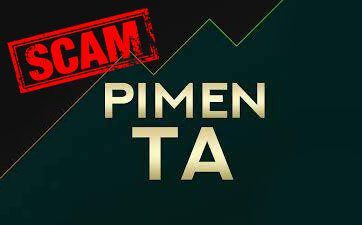
In recent days, subscribers noticed unusual posts on the once-popular Telegram crypto channel called “Pimen. Technical analysis.”, which has 17.4 thousand subscribers.
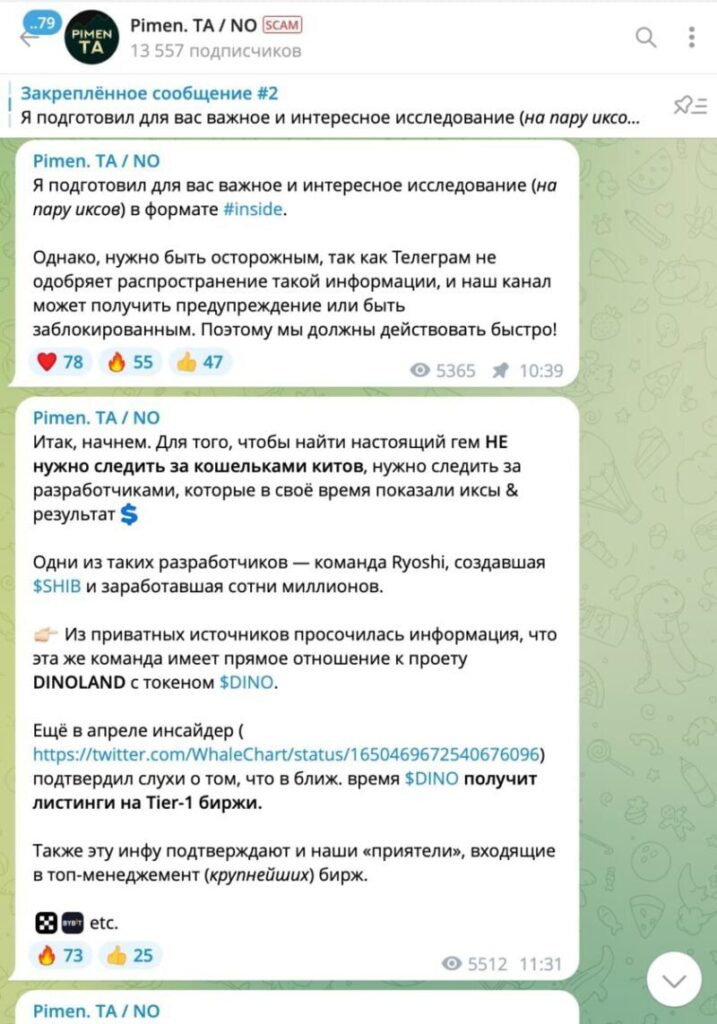
On May 9, the Telegram administration added the SCAM label to the channel.
This case was a classic example of a scam token scheme that can be bought but cannot be sold. This time, the fraudsters presented a project called $DINO. They are trying to trigger a sense of FOMO (fear of missing out on profit) among their subscribers by referring to the recent successful pump (price spike) of $PEPE.
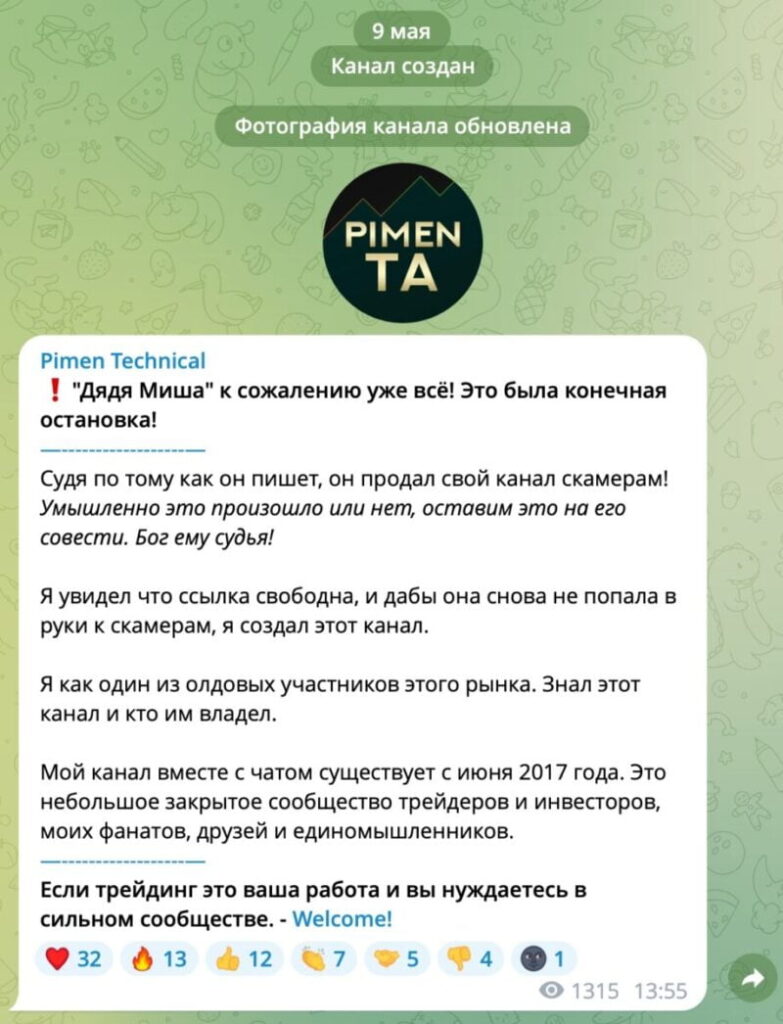
The fraudsters made the channel private, and its public link became invalid and was taken over by another user. This user reported the scam and indicated that, based on the information he found, the channel had been sold to fraudsters:
❗️ “Uncle Misha” is unfortunately already done! This was the final stop!
———————
Judging by the way he writes, he sold his channel to scammers! Whether this happened intentionally or not, let it remain on his conscience. God will judge him!
I saw that the link was available, and so that it would not fall into the hands of scammers again, I created this channel.
As one of the old-time participants in this market, I knew this channel and who owned it.
- $DINO Scam Token
- How the DINO Scam Token Scheme Works
- Main Signs of a Scam Token
- How to Protect Yourself from Scam Tokens
- PancakeSwap and Security
- Conclusion
- Frequently Asked Questions (FAQ)
- Question 1: What risks are associated with buying scam tokens?
- Question 2: Is it possible to recover lost funds after buying a scam token?
- Question 3: What signs indicate that a project may be a scam token?
- Question 4: How can I protect myself from scam tokens?
- Question 5: What responsibility does PancakeSwap have regarding scam tokens?
- Question 6: Where can I find reliable sources of information about projects?
$DINO Scam Token
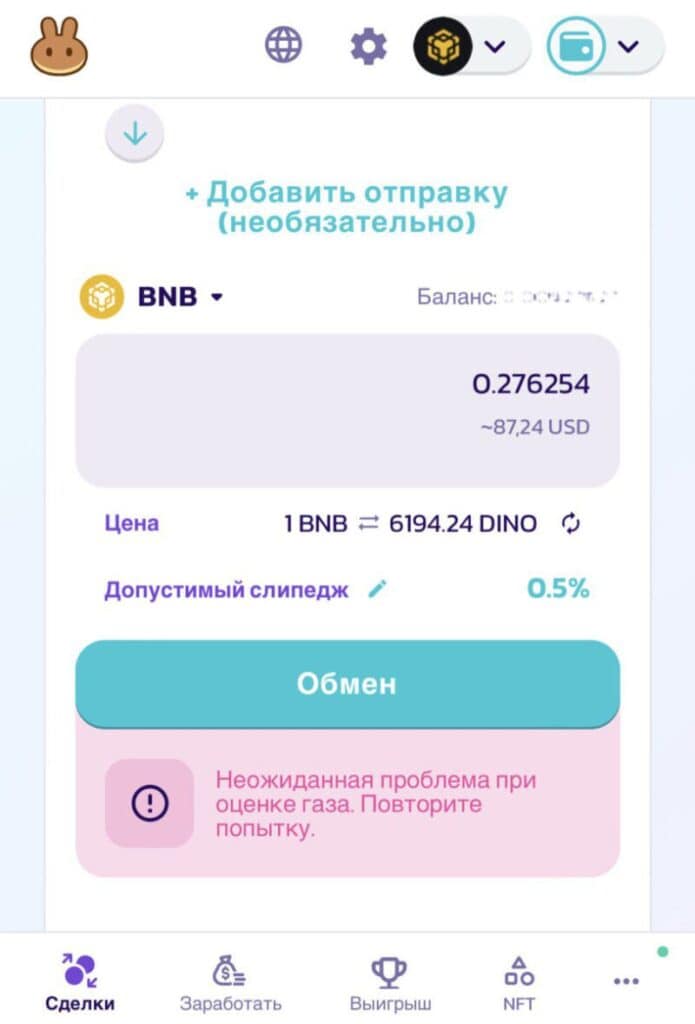
$DINO is one of many scam tokens that appeared on the decentralized platform PANCAKESWAP.FINANCE on May 8, 2023. PancakeSwap is a decentralized cryptocurrency exchange built on the BSC blockchain (Binance Smart Chain). It allows users to trade various tokens and carry out liquidity operations. PancakeSwap is based on the automated market maker (AMM) model and uses smart contracts to ensure the security and transparency of transactions.
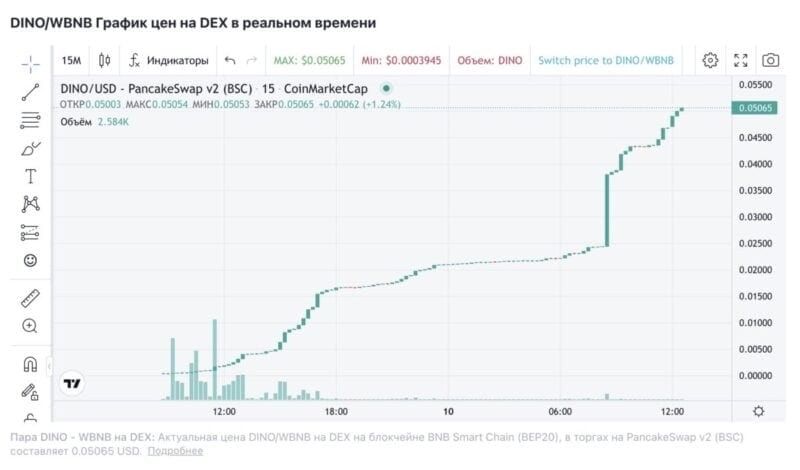
The $DINO project promises revolutionary blockchain technology related to decentralized financial services and, according to fake insider claims, a listing in the coming days on exchanges such as BitMart, Huobi, BYBIT, OKX, and others. The scammers claim to offer unique features and opportunities that are attractive to investors.
How the DINO Scam Token Scheme Works
Scam tokens are fraudulent tokens created to deceive investors. The scheme behind a scam token that can be bought but cannot be sold on PancakeSwap works as follows:
- Attracting attention: Scammers actively promote their scam token, promising high returns and quick profits. They may use various communication channels, including social media, forums, and messaging apps, to attract potential investors.
- Purchase on PancakeSwap: Scammers create a scam token contract and list it on PancakeSwap. Investors can buy this token using Binance Smart Chain and their cryptocurrencies.
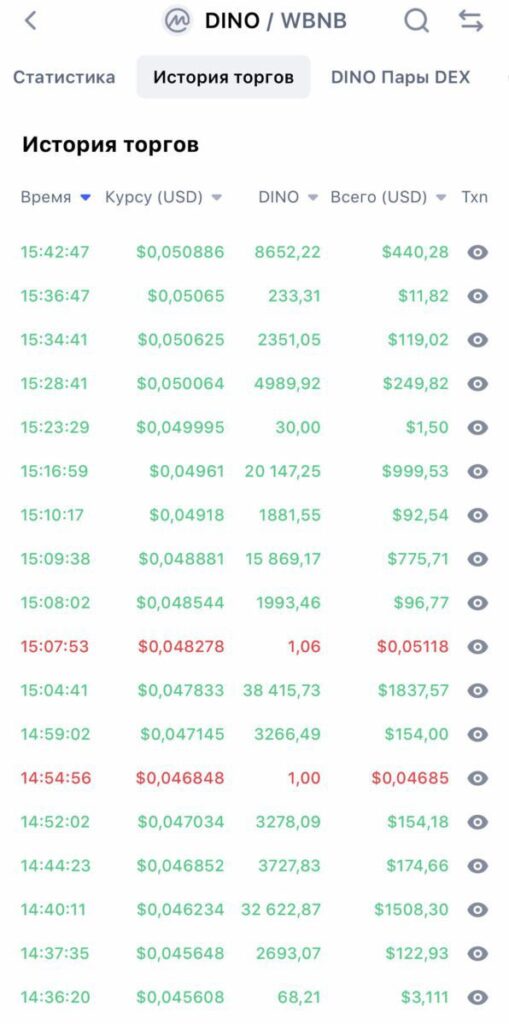
- Sale restrictions: After purchasing the scam token, investors discover that they cannot sell it on PancakeSwap. Scammers may use various methods to restrict selling, such as locking liquidity, modifying the contract, or creating artificial demand for the token. As a result, investors end up trapped with worthless scam tokens that cannot be sold.
- Scammers disappear: Once the scammers receive enough funds from selling the scam tokens, they vanish. They may cover their tracks, close their accounts, and stop communicating with investors. This makes recovering the lost funds virtually impossible.
Main Signs of a Scam Token
When buying tokens on PancakeSwap or any other DeFi platform, it is important to stay alert and recognize potential scam tokens. Here are some of the main signs of a scam token:
- Lack of transparency about the project team: If the project team hides its identity or does not provide enough information about itself, this may be a sign of a scam.
- Promises of high returns: If a project promises unrealistically high returns or guaranteed profits, this may be a sign of fraud.
- Unverified audits and lack of verified contracts: If a project has not audited its contracts or does not provide proof of their security, this may be a sign of risk.
- Lack of information about partners and real users: If a project does not provide enough information about its partners and real users, this may be a sign of a scam.
How to Protect Yourself from Scam Tokens
To avoid falling into the trap of scam tokens, it is recommended to take the following precautions:
- Research the project: Carefully study information about the project, its team, partners, and goals. Check whether it has real users and positive reviews.
- Check the contract: Review the token contract to make sure it is secure and verified. See whether the contract has been audited by independent auditing firms.
- Use reliable sources of information: Use reliable sources of information to get additional details about the project and its reputation. Refer to trusted blockchain news outlets, forums, and communities where users share their experience and opinions.
- Be cautious with return promises: Be realistic in your investment expectations. If a project promises unrealistically high returns or guaranteed profits, this may be a sign of fraud.
- Diversify your investments: Do not put all your funds into one project or token. Diversify your investments to reduce risks and protect your funds.
- Protect your personal data: Do not share your personal data or wallet access with third parties. Scammers may try to gain access to your funds or personal information.
PancakeSwap and Security
PancakeSwap takes measures to ensure user security. They implement modern security methods, conduct contract audits, and verify project liquidity. However, security in the cryptocurrency world always remains a matter of individual responsibility.
Conclusion
Scam tokens on PancakeSwap and other DeFi platforms pose a serious threat to investors. Be attentive and cautious before investing in new projects. Conduct thorough research, use reliable sources of information, and diversify your investments. Remember that your security and the protection of your funds are in your hands.
Frequently Asked Questions (FAQ)
Question 1: What risks are associated with buying scam tokens?
Buying scam tokens can lead to the loss of your funds, as they may be impossible to sell or may be completely worthless.
Question 2: Is it possible to recover lost funds after buying a scam token?
In most cases, recovering lost funds after buying a scam token is virtually impossible. Scammers often disappear, leaving investors with no way to get their money back.
Question 3: What signs indicate that a project may be a scam token?
Some signs of a scam token include a lack of transparency about the project team, promises of unrealistically high returns, and the absence of audited contracts and information about partners.
Question 4: How can I protect myself from scam tokens?
To protect yourself from scam tokens, conduct thorough research on the project, check the token contract, and use reliable sources of information. It is also recommended to diversify your investments and be cautious about promises of returns.
Question 5: What responsibility does PancakeSwap have regarding scam tokens?
PancakeSwap takes security measures and reviews projects, but responsibility for investments lies with individual investors. It is important to be cautious and make your own decisions.
Question 6: Where can I find reliable sources of information about projects?
You can turn to trusted blockchain news outlets, forums, and communities where users share their experiences and opinions. Use sources that have a good reputation and verified data.