In short
- After the October 29, 2026 hack, scammers are exploiting the panic: fake “compensation” portals, “Binance security service” calls, false news about withdrawals reopening, and “fund recovery specialists.”
- Binance says that user funds are safe, and the exchange is covering the losses itself. You do not need to do anything to receive compensation. Any official steps will appear only in the Binance app and on the Binance website.
- Real support will never ask for your seed phrase, 2FA codes, a transfer to a “safe wallet,” or the installation of remote access software.
- In 15 minutes, enable an anti-phishing code, replace SMS with an authenticator app or passkey, set up a withdrawal address whitelist, and check active sessions.
- If you have already entered your details on a fake website or signed a transaction, act according to the plan below — every minute counts.
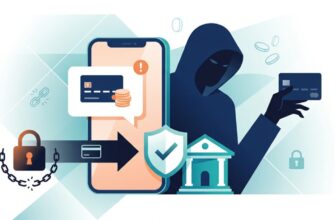
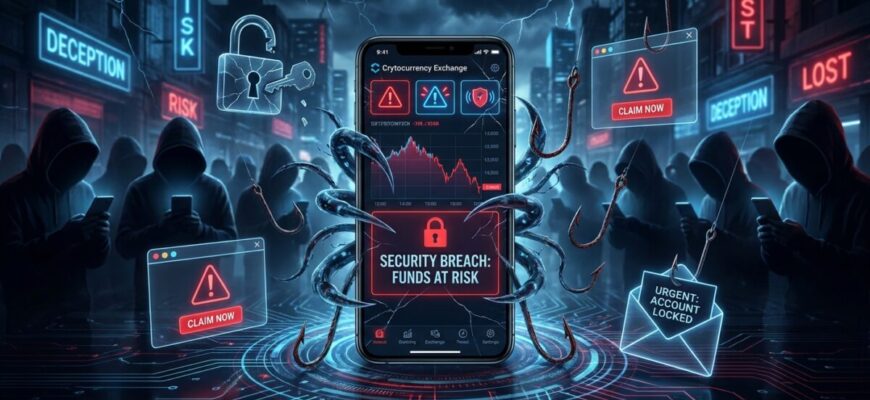
A major hack is a holiday for scammers. Users are frightened, withdrawals are delayed, news reports contradict each other, and any message “from Binance” looks believable. The topic of “Binance compensation” has become the main lure. Below are six schemes already being used after the hack, ways to tell them apart from real messages, and a checklist for protecting your account.
- What happened and why scam activity is peaking now
- 6 scam schemes after the Binance hack
- 1. “Binance Security Team” calls or messages you
- 2. A “compensation claim” or “SAFU payout” portal
- 3. Fake news saying “withdrawals are open — verify your account by…”
- 4. A “compensation token” in your wallet
- 5. “Crypto recovery specialists”
- 6. Fake “Binance Support” apps and bots
- How to tell a real Binance message from a fake
- 15-minute account protection checklist
- If you have already entered your details or signed a transaction
- Risks: what to watch for in the coming weeks
- FAQ
- Do I need to do anything to receive compensation from Binance?
- I got a call from “Binance security.” Is it real?
- How can I verify that an email from Binance is genuine?
- What should I do if I entered my password on a fake website?
- Can cryptocurrency sent to scammers be recovered?
- Is it safe to keep money on Binance right now?
What happened and why scam activity is peaking now
On the evening of October 29, 2026, about $6.36 billion was withdrawn from Binance hot wallets — the largest theft in cryptocurrency history. The FBI linked the attack to North Korea, according to Interfax-Ukraine. A detailed timeline is available in our analysis of the Binance hack.
For users, three facts matter:
- Binance stated that customer balances were not affected, and the exchange will cover the losses from its own funds.
- Withdrawals will resume gradually from November 1, one coin at a time. Delays and queues in the first few days are normal.
- The exchange promised to publish verifiable Proof of Reserves on November 3.
It is precisely delays and uncertainty that scammers turn into a pretext: “your account has been compromised,” “confirm your balance or your compensation will expire,” “withdrawals are open only for verified users until Friday.”
6 scam schemes after the Binance hack
1. “Binance Security Team” calls or messages you
You receive a call or a message on Telegram, WhatsApp, by SMS, or in reply to your post on X: “your account was affected by the hack, you urgently need to verify your identity / transfer funds / unlock withdrawals.” The goal is to get your password, 2FA code, or persuade you to install AnyDesk, TeamViewer, or similar software. Binance does not call users with such requests.
2. A “compensation claim” or “SAFU payout” portal
Search ads, social media posts, and emails lead to a site called “Binance Compensation,” “SAFU Refund,” or “Claim your reimbursement.” Some pages copy the Binance login page and steal your credentials, while others ask you to connect a crypto wallet and “sign a request.” After signing, a drainer empties the wallet.
3. Fake news saying “withdrawals are open — verify your account by…”
A message with a deadline and a link to a copy of the login page. The idea is that you rush to recover your money and do not check the website address.
4. A “compensation token” in your wallet
An unfamiliar token appears in your wallet with a name like “BNB Refund” and a link to a website “for exchange.” Any attempt to sell or “activate” it leads to signing a malicious approval.
5. “Crypto recovery specialists”
Ads and comments under posts about the hack saying, “we’ll recover your funds from Binance for a 10% upfront fee.” This is always a scam: users’ money did not disappear, and real recovery of stolen funds is not sold in comments.
6. Fake “Binance Support” apps and bots
Telegram bots and “support” in messengers, as well as app clones outside the App Store and Google Play. Official support operates only in the chat inside the app and on the Binance website.
How to tell a real Binance message from a fake
| Sign | Real Binance | Scammer |
|---|---|---|
| Where the information appears | In the app, on the website, on the official X account | In private messages, ads, comments, SMS |
| Anti-phishing code in the email | Present and matches yours | Missing or incorrect |
| Urgency | Calm tone, no threats | “24 hours left,” “your compensation will expire” |
| What they ask for | Nothing for compensation | Password, 2FA, seed phrase, connect a wallet, transfer funds |
| Calls | Does not call asking for transfers | Calls and claims to be from the security department |
| Links | The binance.com domain that you enter yourself | Lookalike domains, shortened links |
You can check whether a website, email, phone number, or Telegram account belongs to the exchange on the official Binance Verify page — find it through the app or website, not via a link in a message.
15-minute account protection checklist
- Log in only through the app or by manually typing the address. Do not access your account through links in emails, SMS, or messengers, even if they look official.
- Enable the anti-phishing code. In your security settings, set your own code word. It will appear in every genuine Binance email, making fakes immediately noticeable.
- Replace SMS 2FA with a more secure method. Use an authenticator app, a passkey, or a hardware security key. SMS is vulnerable to SIM swapping.
- Set up a withdrawal address whitelist. Enable the feature that allows withdrawals only to pre-saved addresses. Even if your password is stolen, it will be harder to withdraw funds to someone else’s wallet.
- Check devices, sessions, and API keys. End unfamiliar sessions, remove devices you do not recognize, and delete API keys you no longer use.
- Secure your email. Change the password for the email linked to your account and enable two-factor protection on it. Email is the key to restoring access.
- Check for data breaches. Enter your email on haveibeenpwned.com. If it appears in breach databases, change your passwords everywhere they were reused.
- Move long-term holdings to your own wallet. Keep only trading capital on the exchange. We explain how to do this without mistakes in the guide how to withdraw crypto from an exchange to your own wallet.
If you have already entered your details or signed a transaction
| What happened | What to do right now |
|---|---|
| Entered your login and password on a fake website | Change your Binance and email passwords, end all sessions, and check 2FA and the whitelist. If you suspect an attacker has logged in, temporarily lock the account using the disable function in the security settings and contact support through the app. |
| Shared a 2FA code or installed remote access software | Remove the software, disconnect your computer or phone from the internet, use another device to change your passwords and lock the account. Contact support through the app. |
| Entered your seed phrase | Treat the wallet as compromised. From a clean device, create a new wallet and immediately transfer everything that remains there. More details are in the article lost your seed phrase. |
| Signed a transaction or an “approval” in your wallet | Revoke the granted approvals via revoke.cash or the approval checker in the block explorer, and transfer the remaining funds to a new address. |
| Sent cryptocurrency to scammers | Save the transaction hash and all correspondence. File a report with the cyber police. If USDT or USDC was stolen, the issuer may freeze it at the request of law enforcement, so speed matters. |
Do not pay “recovery specialists” who contact you after your loss. This is the second round of the same scam.
Risks: what to watch for in the coming weeks
- Withdrawal delays. While withdrawals are being launched in stages, scammers will offer to “speed them up” for a fee. No such acceleration exists.
- Proof of Reserves. You should only check whether your balance is included in reserves in the official app. “Reserve verification” websites accessed through links are phishing.
- Tainted coins. Hackers will launder the remaining roughly $2.4 billion through bridges, exchangers, and OTC. Exchanges will more often block deposits linked to stolen funds. Do not buy cryptocurrency from random sellers at a discount.
- New phishing waves. Every piece of news about the hack — an investigation, report, or compensation — will become a pretext for new phishing campaigns.
FAQ
Do I need to do anything to receive compensation from Binance?
No. Binance says that user balances were not affected, and the exchange is covering the losses itself. If any official steps appear, they will be announced in the Binance app and on the Binance website, not in emails with links or private messages.
I got a call from “Binance security.” Is it real?
Almost certainly not. Binance does not call users asking them to transfer funds, provide a code, or install remote access software. Hang up and check your account through the app.
How can I verify that an email from Binance is genuine?
Enable the anti-phishing code in your security settings. Every genuine Binance email will include your code word. If it is missing, the email is fake. Communication channels can be checked on the official Binance Verify page.
What should I do if I entered my password on a fake website?
Immediately change your Binance and email passwords, end all active sessions, check your two-factor authentication and address whitelist. If there are signs of unauthorized access, temporarily lock your account and contact support through the app.
Can cryptocurrency sent to scammers be recovered?
Sometimes. Blockchain transactions are irreversible, but stablecoins such as USDT and USDC can be frozen by the issuer at the request of law enforcement. File a report with the cyber police as quickly as possible, save the transaction hash, and do not contact “recovery specialists.”
Is it safe to keep money on Binance right now?
The exchange says all losses are fully covered and is restoring withdrawals in stages. But the hack showed the broader risk of centralized exchanges: keep only trading capital on an exchange, and store long-term savings in your own wallet.