In Brief
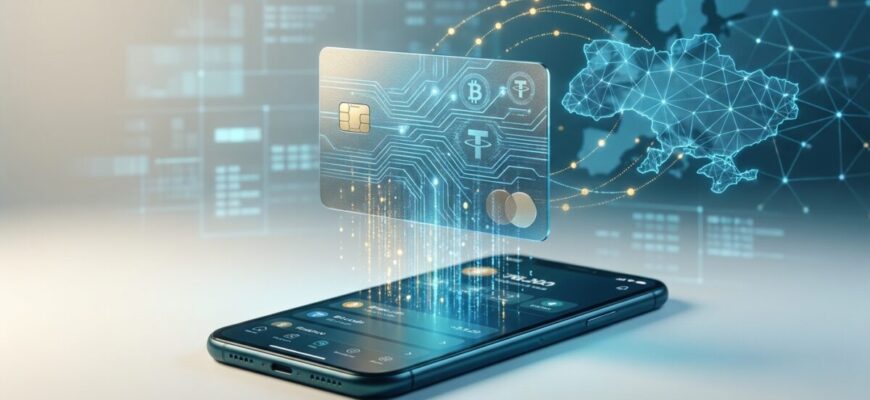
- A crypto card converts cryptocurrency into fiat at the moment of payment. The funds do not pass through your account at a Ukrainian bank, so there are no P2P transfers or the related financial monitoring questions.
- Available to residents of Ukraine, in particular, are WhiteBIT Nova (Visa), Trustee Card (Mastercard), Utorg (virtual Mastercard), and the hryvnia-denominated Weld Card.
- Bybit Card, Nexo, Gate Card, and Wirex do not issue cards to residents of Ukraine. They are available to Ukrainians in the EU upon confirmation of an address in the EEA.
- The main costs are conversion, double currency exchange, and cash withdrawals. Check the fee schedule on the issuer’s website, as terms change.
- Under draft law 10225-d, paying with cryptocurrency for goods and services is considered a sale. Keep a record of your spending history.
Withdrawing USDT to a Ukrainian bank card is becoming more difficult: Binance has paused card withdrawals, banks are limiting transfers, and P2P transactions are facing increasingly strict checks. A crypto card solves some of these issues differently: you spend cryptocurrency directly. We explain which cards are actually available and what the catch is.
- How a crypto card works
- Cards available to residents of Ukraine
- Cards for Ukrainians in the EU
- How to choose and get a crypto card: step by step
- Where you lose money
- Taxes and accounting
- Risks
- FAQ
- Which crypto cards are available to residents of Ukraine?
- Can a Ukrainian get a Bybit Card?
- Do you need to withdraw USDT to a bank card in order to pay with it?
- How much does it cost to use a crypto card?
- Is it safe to keep money on a crypto card?
- Is payment with a crypto card taxable?
How a crypto card works
- You top up the card balance with cryptocurrency: USDT, USDC, BTC, or another asset.
- When you make a payment, the issuer sells the required amount of cryptocurrency and pays the merchant in fiat via Visa or Mastercard.
- For the seller, this is a regular card payment. For a bank in Ukraine — nothing: the money does not pass through your bank account.
Almost all cards are custodial: the cryptocurrency in the card balance is held by the issuer, just like on an exchange. This is convenient, but it carries the same risk: the account may be frozen.
Cards available to residents of Ukraine
| Card | Payment system | Account currency | Issuance | Features |
|---|---|---|---|---|
| WhiteBIT Nova | Visa | EUR (double conversion when paying in hryvnia) | Virtual free of charge, physical 10 EUR | Limits of 10,000 EUR per day and 25,000 EUR per month, cashback up to 10%, cash withdrawal 1.5%, Apple Pay and Google Pay |
| Trustee Card | Mastercard | EUR | 10 EUR, maintenance free of charge | Verification via Diia, BTC, ETH, USDT, conversion 0.5%, withdrawal 1.5% + 1 EUR |
| Utorg | Mastercard | EUR | Virtual, free of charge | Non-custodial, more than 180 tokens, an international passport is required for verification |
| Weld Card | Mastercard | UAH | Virtual, free of charge | USDT only on the TRC-20 network, limits of 10,000 UAH per day and 100,000 UAH per month, minimum age 21 |
According to the Liga.Crypto review, updated on October 13, 2026. Sources contain inconsistencies regarding limits and fees, and terms for new clients from Ukraine are changing — check the rates on the issuer’s website before applying.
It is also worth checking KAST — a Visa card for spending stablecoins. Please confirm availability for residents of Ukraine during registration.
Cards for Ukrainians in the EU
If you have proof of address in an EEA country, the selection is broader:
- Bybit Card — Mastercard issued through the European company Bybit EU, with cashback, Apple Pay, and Google Pay. It is not issued to residents of Ukraine and does not work in Ukraine.
- Nexo Card — available in the EEA and the UK; the physical card is not shipped to Ukraine.
- Gate Card — only for EEA countries.
- Cards from exchanges licensed under MiCA — for example, from Crypto.com. A list of licensed exchanges is available in the guide how a Ukrainian in the EU can withdraw crypto in euros.
How to choose and get a crypto card: step by step
- Define your purpose. Daily purchases, travel, paying for online services, or cash withdrawals. Important parameters depend on this.
- Check availability for your country. If you are a resident of Ukraine or live in the EU, the selection of cards will differ.
- Compare the total cost. Cryptocurrency conversion, currency exchange (especially double conversion: USDT → EUR → UAH), cash withdrawals, issuance, and maintenance.
- Check supported coins and networks. Make sure the card accepts USDT on the network where you hold it. If you chose the wrong network, see the guide sent USDT to the wrong network.
- Complete verification. Usually, a passport or international passport is required, and sometimes Diia or proof of address.
- Top up a small amount and test it. Pay for a purchase and check the actual conversion in your transaction history.
- Keep only the amount you need for upcoming expenses on the card. Keep the rest in your own wallet.
Where you lose money
- Double conversion. A euro-denominated card used to pay in hryvnia converts USDT to EUR, and then EUR to UAH at the payment system’s exchange rate.
- Cash withdrawals. Usually a percentage of the amount plus a fixed fee.
- Top-up spread. The cryptocurrency purchase rate within the service may differ from the exchange rate.
- Inactivity and issuance. Some cards charge a fee for the physical card or delivery.
Taxes and accounting
Under draft law 10225-d, any transfer of cryptocurrency in exchange for money, goods, or services is considered a sale. This means that paying for a purchase with a crypto card may formally be treated as a sale of cryptocurrency with a possible profit. Until the law is adopted, there is no special regime, but it is worth keeping the history of card transactions together with your exchange history. We explained how to calculate profit in the guide how to calculate profit from crypto.
Risks
- Custodial storage. The issuer may freeze the card and balance during a review, just like an exchange.
- Regulatory changes. Cards for Ukrainians appear and disappear as issuers revise their country lists. Do not keep large sums on the card.
- AML checks. Funding with “tainted” USDT can block the card. Check the sender address in an AML service before topping up.
- Fraud. Fake “card issuance” websites and Telegram bots collect data and deposits. Apply for a card only through the issuer’s official website or app.
FAQ
Which crypto cards are available to residents of Ukraine?
According to Liga.Crypto’s review as of October 2026, WhiteBIT Nova, Trustee Card, Utorg, and the hryvnia-denominated Weld Card are available to residents of Ukraine. Terms for new customers change, so check them on the issuer’s website.
Can a Ukrainian get a Bybit Card?
No for a resident of Ukraine: the card is issued in the EEA and the United Kingdom and does not work in Ukraine. A Ukrainian who lives in the EU and can confirm an address in an EEA country can apply for it.
Do you need to withdraw USDT to a bank card in order to pay with it?
No. A crypto card converts cryptocurrency into fiat at the moment of payment, so the money does not pass through your account at a Ukrainian bank.
How much does it cost to use a crypto card?
It depends on the card: usually these are fees for cryptocurrency conversion, currency exchange, cash withdrawals, and sometimes issuing a physical card. For example, with WhiteBIT Nova, the virtual card is free, the physical card costs 10 EUR, and cash withdrawals are 1.5%.
Is it safe to keep money on a crypto card?
Most crypto cards are custodial: the cryptocurrency is held by the issuer, and they can freeze the balance. Keep only the amount you need for upcoming expenses on the card.
Is payment with a crypto card taxable?
Under draft law 10225-d, paying for goods and services with cryptocurrency is considered its sale. The law has not yet been adopted, but it is worth keeping your card transaction history for tax accounting.