In short
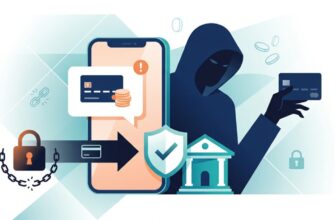
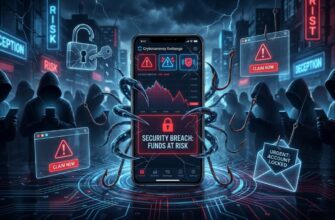
- The most common schemes: a fake receipt or payment SMS, a triangle scheme involving someone else’s money, a request to cancel the order after payment, pressure to choose “mutual agreement” in an appeal, fake exchange support.
- The seller’s main rule: release crypto only when the money is actually visible in your bank statement and the payer’s name matches the buyer’s name on the exchange.
- If something goes wrong, immediately open an appeal within the order and do not cancel it. On Bybit, evidence is accepted in video format, not as screenshots.
- If “dirty” money arrives on your card, return it only through the bank and notify both the bank and the exchange immediately.
- File a report with the cyber police: without it, the bank and the exchange often cannot help.
P2P remains the main way to buy and sell USDT for hryvnia. Alongside it, fraud is also increasing: from primitive fake screenshots to schemes after which the seller loses both the cryptocurrency and access to the card. Below is how to recognize a scheme before the deal and what to do if you have already been scammed.
- The most common schemes
- What to do if you were scammed on P2P: step by step
- How the appeal process works on Bybit
- If the bank blocked the card after a fraudulent transaction
- How not to become a victim
- Risks
- FAQ
- What should I do if I released USDT but the money did not arrive?
- Can an order be canceled if the buyer asks?
- What is a triangular scheme on P2P?
- What evidence is required for an appeal on Bybit?
- I received money on my card from another person, not from the buyer. What should I do?
- Can the police help recover the money?
The most common schemes
| Scheme | What it looks like | How to protect yourself |
|---|---|---|
| Fake receipt or SMS | The buyer sends a screenshot of the transfer, or you receive an SMS “about the credit,” but there is no money in the account | Verify incoming funds only in your banking app, not by screenshots or SMS |
| Triangle scheme | A scammer “sells” a product to a third person, but asks them to send the payment to you. You receive someone else’s money and release the crypto, then the victim demands their money back | Check that the payer’s name matches the buyer’s name on the exchange, and do not accept payments from third parties |
| Cancellation after payment | “Technical issues, cancel the order, I’ll send the payment again” | Never cancel an order after payment has been made — open an appeal |
| Mutual agreement in an appeal | The scammer persuades you to choose “Mutual Agreement,” which closes the order and releases the crypto | Select “Negotiation Failed” and attach evidence |
| Fake support | A “Bybit employee” contacts you by email or on Telegram and asks you to release the crypto | The exchange will never ask you to release funds by email or in a messenger |
| Middleman in a messenger | The deal is offered in Telegram or WhatsApp “with no commission,” but the money ends up in the wrong place | Communicate only in the order chat on the exchange |
| Payment reversal | After receiving the crypto, the buyer reverses the payment or pays using an invalid method | Accept only instant transfers that cannot be reversed |
Most of these schemes are listed in the Bybit P2P safety rules; scammers operate the same way on Binance. Bybit also describes another triangular variation: two scammers open orders with the same seller, use a single payment confirmation, and demand that the crypto be released twice.
What to do if you were scammed on P2P: step by step
- Do not cancel the order and open an appeal. An appeal freezes the disputed situation and passes it to the exchange’s support team.
- Gather evidence. A bank statement for the order period, the order chat, and the counterparty’s profile. On Bybit, evidence is accepted in video format: record your screen as you open your banking app and show whether the payment is absent or present.
- Do not leave the order chat. For the exchange, any correspondence in messengers does not exist.
- File a report with the cyber police. Include the order ID, the scammer’s profile, the amounts, and the payment details. The report number will be useful for the exchange and the bank.
- If someone else’s money arrives on your card, notify the bank. Return it only through the bank and only in the way it instructs, not using the “buyer’s” payment details.
- Give the exchange’s support team the police report number. The exchange may restrict the scammer’s account and preserve data for the investigation.
- Keep everything. Screenshots of profiles, correspondence, and statements. If the case goes to court, you will need them.
How the appeal process works on Bybit
- Who provides proof. The buyer must prove that payment was made, and the seller must prove that the funds were not received.
- Evidence format. Bybit accepts video showing the required details; screenshots are not accepted.
- Timeframes. The counterparty has a limited time to respond, after which the exchange makes a decision based on the available evidence. For delayed bank transfers, Bybit usually waits 3–5 days.
- Third-party payments. The exchange does not protect such orders: the seller is advised to return the money, and the order is canceled.
- No guaranteed outcome. The exchange acts as an intermediary and does not promise a decision in your favor.
Details are available in the Bybit appeals guide. Binance has a similar procedure: the appeal is opened within the order, and evidence is uploaded there as well.
If the bank blocked the card after a fraudulent transaction
If money from a fraud victim passed through your card, the bank will almost certainly restrict the card and request an explanation. What to do:
- Explain the situation in the bank’s official chat: date, amount, sender, P2P order ID.
- Attach the order history from the exchange and the police report number.
- Return someone else’s funds through the bank if the bank offers this option.
- Show that you trade using your own card and your own account, and that the volumes match your income.
Detailed instructions are in the article Monobank blocked a card after P2P. We explained why it is important not to accept other people’s money after the money mule law was adopted in a separate guide. If an “accidental” transfer from a stranger was credited to your card, see the article someone else’s money was sent to your card.
How not to become a victim
- Only your own card and your own account.
- The money appears on the statement, the name matches — then we release.
- No payments from third parties or “friends”.
- Use only the order chat, no messengers.
- Do not give in to urgency. “Faster, I have a timer” is classic pressure.
- Start with counterparties who have a history. A rating and number of trades are not a guarantee, but they reduce risk.
- Check the coins when buying. The USDT you buy may turn out to be “dirty”: check the seller’s address in an AML service and against Tether’s blacklist.
Risks
- Getting released crypto back is difficult. If you released USDT without receiving payment, there is still a chance only until the scammer withdraws it from the exchange.
- A card freeze may drag on. If the victim’s bank filed a claim, the investigation will take time.
- Criminal risk. If you regularly accept money from third parties, after the money mule law this may lead to more than just a freeze.
- “Recovery helpers.” Scammers find victims in reviews and comments and offer to “get the money back through contacts at the exchange” for an upfront payment.
FAQ
What should I do if I released USDT but the money did not arrive?
Immediately open an appeal in the order, attach a video of the bank statement for the transaction period, and file a report with the cyber police. The faster you act, the higher the chance that the exchange will be able to restrict the scammer’s account in time.
Can an order be canceled if the buyer asks?
If you are the buyer and have already paid — no. Canceling after payment removes your exchange protection. Instead, open an appeal.
What is a triangular scheme on P2P?
The scammer sells a non-existent item to a third person and asks them to transfer the money to you. You receive the payment and release the cryptocurrency to the scammer, while the deceived buyer demands their money back through the bank. Protection — verify that the payer’s name matches the buyer’s name on the exchange.
What evidence is required for an appeal on Bybit?
Bybit accepts proof in video format: a screen recording showing you opening the banking app and demonstrating the presence or absence of the payment. Screenshots are not accepted.
I received money on my card from another person, not from the buyer. What should I do?
Do not release the cryptocurrency, open an appeal, and notify the bank. Return the money only through the bank, not using the payment details provided by the buyer.
Can the police help recover the money?
In any case, a report to the cyber police is required: without it, the bank and the exchange often cannot disclose the scammer’s details or freeze their funds. There is no guarantee of recovery, but filing a report increases the chances.